5/17/06
Post your pitch!
Your first writing assignment is to pitch a movie about an early film innovator. Post it in the comments below.


Eadweard Muybridge
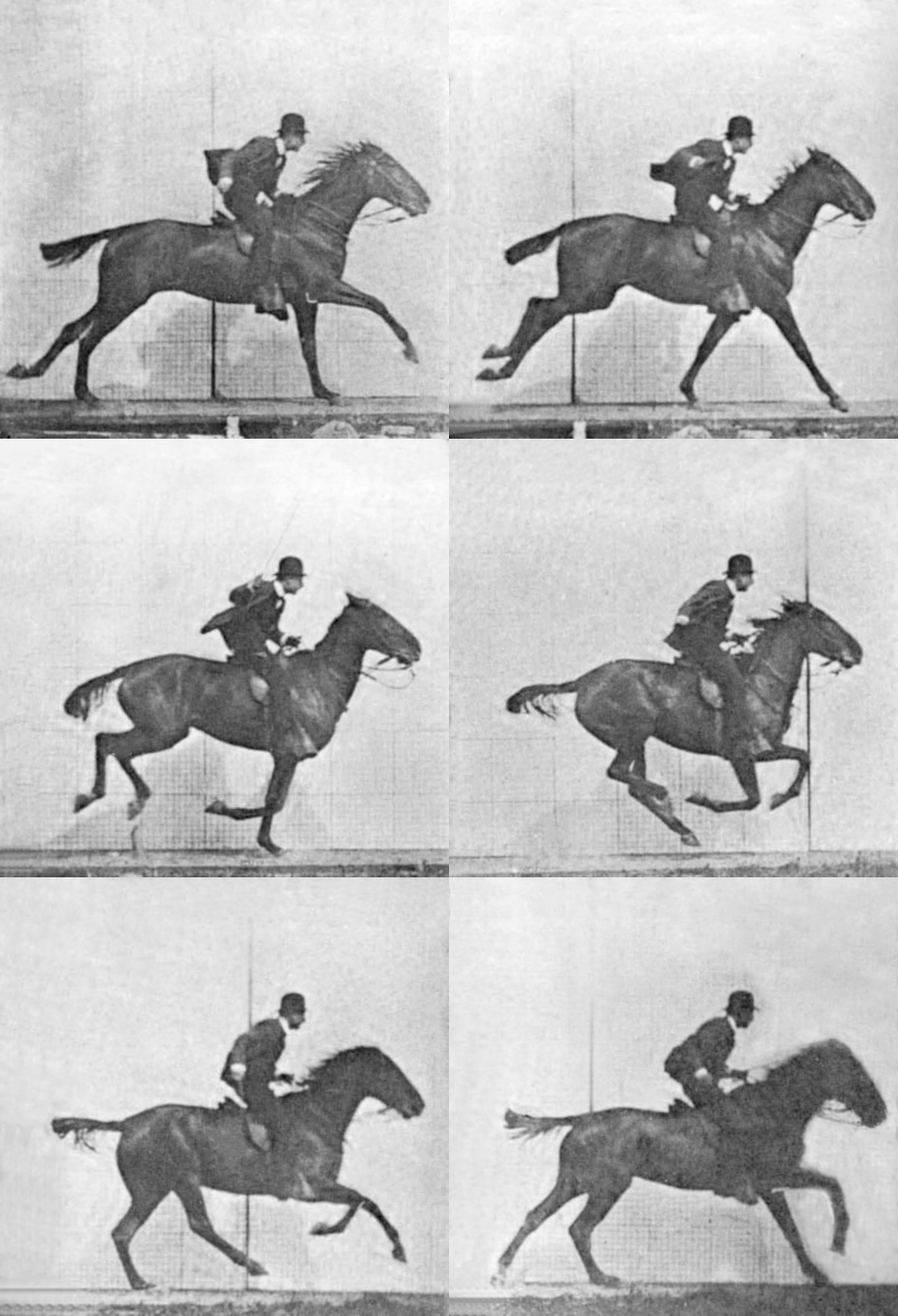
You can read about Eadweard Muybridge and his photographs capturing still images of people and animals in motion here.
Here is a short project made using Muybridge's photographs, from the website http://theabstractions.com
5/16/06
Stop-Motion Precursor

In 1902,Edwin S. Porter, (famous for directing The Great Train Robbery in 1903), made a short trick-film, Fun in a Bakery Shop, that was a predecessor of stop-motion animation. You can see clips and read about other early American animation at the Library of Congress website, Origins of American Animation.
5/15/06
The Father of American Animation - J. Stuart Blackton
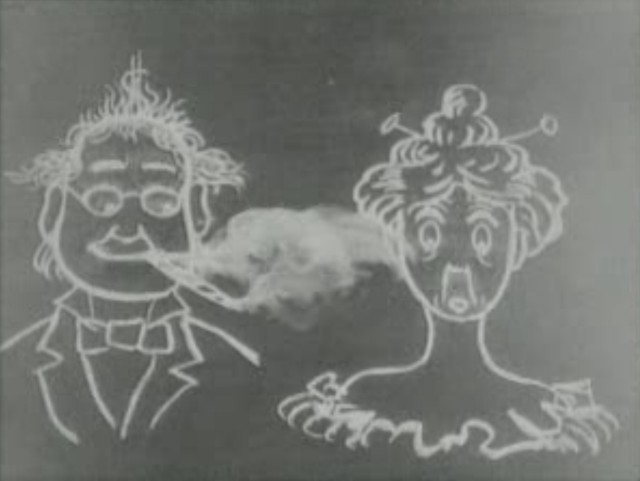
The first film with a bit of animation -- a so called "Trick Film" made in America was The Enchanted Drawing, made in 1900, by vaudeville performer J. Stuart Blackton, working with Thomas Edison. In 1906 he made a film called Humorous Phases of Funny Faces. You can see it and read about it at the Library of Congress.
Fantasmagorie by Emile Cohl
French Animator Emile Cohl created Fantasmagorie in 1908. You can read more about his intriguing life an his pioneering efforts in animation here in French, or here in English.
5/14/06
Paleoanimation?

Here is an article about an ancient Persian pot which has sequential images decorating it. The animated the images -- you can download a clip.
5/13/06
Optical Toys
 Pre-cinematic inventions and optical toys that led to the invention of film and animation can be seen here.
Optical Toys include these:
Praxinoscope
Phenakistoscope
Flipbooks
This French site has several demos of old flipbooks.
Here is how to make a flipbook.
You can make an online "Flipbook" here.
The Kinetoscope, an advance in moving pictures, was invented by Thomas Edison.
Here is a link to two collectors who specialize in Optical Toys.
Here is a flipbook made by a student in the summer of 2008:
Make a flipbook (online or on paper) and post it in the comments below.
Magic Lantern
 The Magic Lantern is a pre-cinematic invention that sometime had "animated" slides. It is a precursor to the projectors, and was very popular in Victorian times. You can read more about the history of the Magic Lantern here.
Another optical device that led to photography is the Camera Obscura.
5/12/06
Zoetrope

The Zoetrope, or Wheel of Life, was another early optical toy. Looking through the slits created the illusion of a moving cycle. Here is more about Zoetropes from Ruth Hayes' Random Motion site.
Also, here is an article about how you can make a Zoetrope from a Salad Spinner.
Zoetrope cycles have to be very simple, and are made of only 12-14 images. What would make a good animation cycle for a Zoetrope? Photograph your zoetrope strip -- or better yet, if you can, videotape it spinning in a zoetrope and post the video below.
Here are some Zoetrope Strips we made in class!
Zoetrope cycles have to be very simple, and are made of only 12-14 images. What would make a good animation cycle for a Zoetrope? Photograph your zoetrope strip -- or better yet, if you can, videotape it spinning in a zoetrope and post the video below.
Here are some Zoetrope Strips we made in class!
Thaumatrope

The Thaumatrope is an optical toy that uses what has been called persistence of vision. Persistence of vision has been called a myth - read about the controversy here.)
Ruth Hayes, an independent animator and professor at Evergreen State College in Olympia, Washington, tells how to make your own thaumatrope here.
A Thaumatrope Simulator.
The bird in the cage is a classic Thaumatrope design. What other pairs of images would be well suited to this device? Make a Thaumatrope, photograph each side, and post it below in the comments.
Hello!
Hi -- I am a independent animator and a professor of animation. I often use an unusual technique with clay-on-glass, plasticine-type modelling clay, spread thinly on glass, and underlit. This is a kind of under-the-camera animation. Recently I have been collaborating with children on a variety of cut-out animation projects. The Girls of the World project and Shopping for Utopia are two of these collaborative projects. I am intrigued by the history of animation that you don't usually hear about-- independent artists, studios that broke with the Disney tradition, international animation, and animation's prehistory. This blog will be used as forum for research and discussion for my class, to be taught in the summer of 2006 at Cornell University, from June 26- August 8.
If you are interested in the course, you can visit the course listing at Cornell Summer Session.
If you are interested in the course, you can visit the course listing at Cornell Summer Session.
Subscribe to:
Comments (Atom)